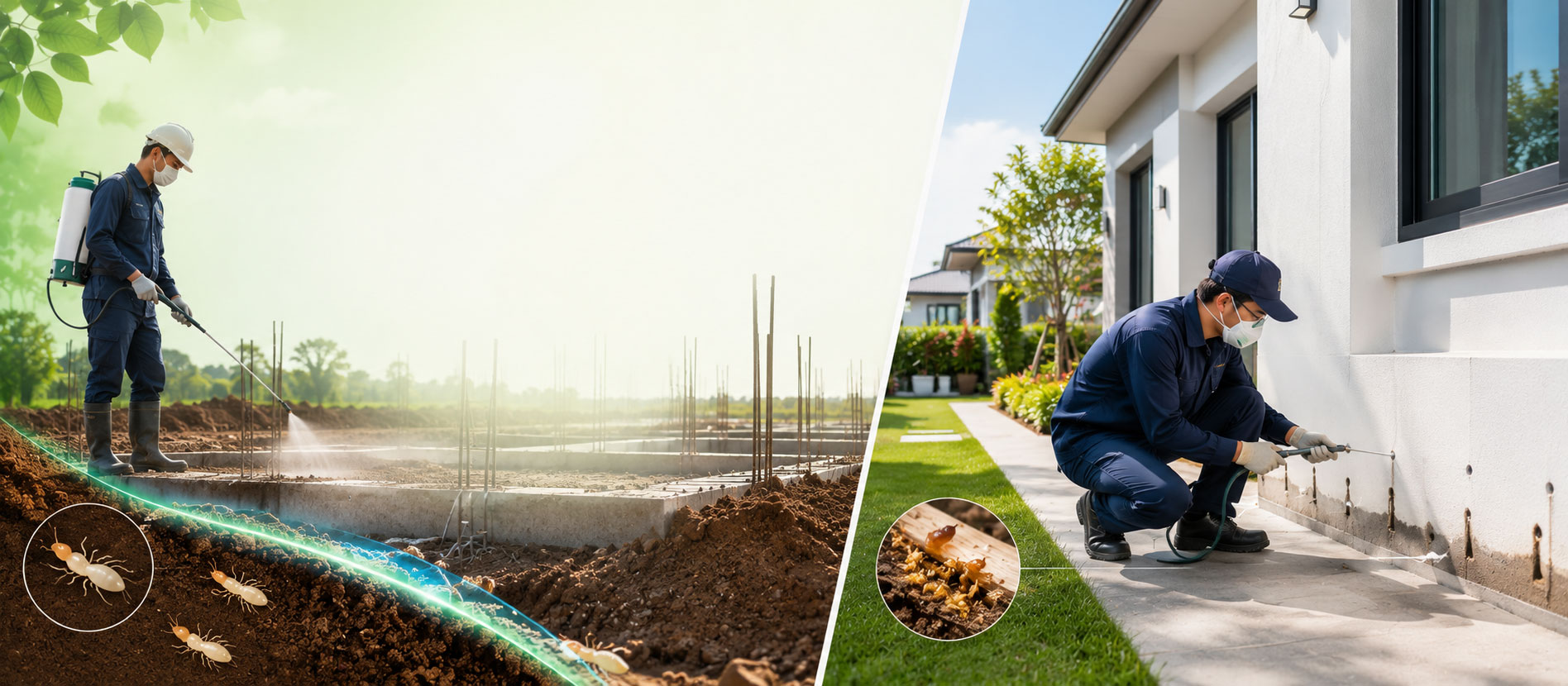
Termites are often called "silent destroyers" because they can cause extensive damage to a property long before the signs become visible. Every year, homeowners, builders, and commercial property owners spend significant amounts repairing termite damage that could have been prevented with the right treatment.
One of the most common questions people ask before constructing or renovating a property is:
"What is the difference between pre-termite treatment and post-termite treatment?"
Although both treatments aim to protect buildings from termite attacks, they are performed at
different stages of construction and follow different treatment methods. Understanding these
differences helps property owners make informed decisions and avoid expensive structural
repairs in the future.
At Pepcopp Pest Control Services Pvt Ltd, we provide professional termite management
solutions for residential, commercial, industrial, and institutional properties across Mumbai,
Thane, Navi Mumbai, Goa, and nearby regions. This guide explains how pre-termite and post
termite treatments work, their advantages, and when each one is required.
Understanding the Termite Threat
Termites feed primarily on cellulose, a natural component found in wood, paper, cardboard,
plywood, furniture, and many building materials. Subterranean termites, the most common type
found in India, live underground and travel through mud tubes to reach food sources inside
buildings.
Since termites usually remain hidden behind walls, beneath floors, or inside wooden structures,
infestations often go unnoticed until considerable damage has already occurred.
Without timely protection, termites can damage:
- Wooden furniture.
- Door and window frames.
- Cabinets.
- Flooring.
- False ceilings.
- Wooden partitions.
- Documents and books.
- Electrical conduits surrounded by wood.
- Structural wooden components.
The best way to minimize this risk is by choosing the right termite treatment at the appropriate
stage.
What Is Pre-Termite Treatment?
Pre-termite treatment, also known as pre-construction anti-termite treatment, is carried out
before a building is constructed. It involves treating the soil with approved termiticides to
create a protective barrier that discourages termites from entering the structure.
The treatment is performed during different phases of construction before the foundation,
flooring, and plinth are completed.
The objective is simple:
Stop termites before they ever enter the building.
How Pre-Termite Treatment Is Performed
Professional technicians apply termite-control solutions during several stages of construction,
including:
- Before laying the foundation.
- Around foundation trenches.
- Beneath floor slabs.
- Along plinth filling.
- Around service pipe entry points.
- Around expansion joints.
- Along the building perimeter.
This creates a continuous protective zone between the soil and the structure.
Advantages of Pre-Termite Treatment
Long-Term Protection
A properly executed pre-construction treatment provides long-lasting protection against
subterranean termites.
Lower Repair Costs
Preventing termite entry during construction helps avoid expensive repairs after the building is
completed.
Better Structural Safety
Wooden fixtures, flooring, and structural elements remain protected from hidden termite attacks.
Cost-Effective
Applying treatment during construction is generally easier and more economical than dealing
with an established infestation later.
Ideal for New Projects
Builders, developers, architects, and homeowners can protect their investment from the very
beginning.
What Is Post-Termite Treatment?
Post-termite treatment is carried out after a building has already been constructed. It is
recommended when termites are detected in an existing property or when no preventive
treatment was performed during construction.
Instead of creating a barrier before construction, technicians inspect the property, identify termite
activity, and treat affected as well as vulnerable areas.
How Post-Termite Treatment Is Performed
Depending on the severity of infestation, technicians may use one or more treatment methods
such as:
- Soil injection around the foundation.
- Drilling and chemical injection along walls.
- Treatment beneath flooring.
- Wooden surface treatment.
- Localized treatment of infested areas.
- Perimeter treatment around the building.
The treatment plan is customized according to the property's design, infestation level, and
construction type.
Which Treatment Is Better?
Neither treatment is universally "better" the right choice depends on the stage of your property.
If you are constructing a new building, pre-termite treatment is the preferred option because
it helps prevent termite entry from the beginning.
If your building is already completed or you have noticed termite activity, post-termite
treatment is the appropriate solution to control the infestation and protect the property from
further damage.
The most effective termite management begins with a professional inspection and a treatment
plan tailored to your property's needs.
Signs That You Need Post-Termite Treatment
Many people discover termites only after noticeable damage has occurred.
Watch for these warning signs:
- Mud tubes on walls or foundations.
- Hollow-sounding wooden furniture.
- Swarming winged termites.
- Discarded termite wings near windows.
- Sagging wooden doors.
- Damaged wooden flooring.
- Tiny holes in wooden surfaces.
- Bubbling paint.
- Powder-like residue near wood.
- Doors and windows becoming difficult to close.
If you notice any of these signs, arrange a professional termite inspection as soon as possible.
Why Professional Termite Treatment Matters
Termite control is far more than simply applying chemicals. Successful treatment requires:
- Accurate identification of termite species.
- Assessment of infestation level.
- Selection of suitable treatment methods.
- Proper application techniques.
- Compliance with safety standards.
- Follow-up inspections when required.
Improper or incomplete treatment may leave hidden colonies active, allowing termites to return
and continue damaging the property.
Professional expertise helps ensure that vulnerable areas are identified and treated effectively.
Why Choose Pepcopp Pest Control Services Pvt Ltd?
At Pepcopp Pest Control Services Pvt Ltd, we deliver comprehensive termite management
solutions designed to safeguard residential, commercial, and industrial properties.
Why Customers Trust Us
- Government-approved pest management services.
- ISO-certified company.
- CIB-approved termite control chemicals.
- Trained and experienced technicians.
- Customized treatment plans for every property.
- Modern equipment and application methods.
- Residential and commercial expertise.
- Transparent pricing.
- Prompt response and professional support.
- Service coverage across Mumbai, Thane, Navi Mumbai, Goa, and nearby regions.
Whether you are building a new property or protecting an existing one, our team recommends
the most suitable termite treatment based on your property's condition and long-term protection
goals.
Frequently Asked Questions
Is pre-termite treatment mandatory?
Many builders and property owners choose pre-termite treatment because it provides preventive
protection and supports long-term durability. Local regulations and project specifications may
also require it in certain developments.
Can post-termite treatment eliminate termites completely?
Professional treatment can significantly reduce and control termite activity. Regular inspections
and preventive measures help maintain long-term protection.
How long does termite treatment last?
The duration depends on factors such as soil conditions, construction type, environmental
exposure, and maintenance. Periodic inspections are recommended to ensure continued
protection.
Can termites return after treatment?
If new entry points develop or preventive measures are neglected, termites may reappear over
time. Scheduled inspections help detect any renewed activity early.
Which treatment is more economical?
Pre-termite treatment is generally more cost-effective because it prevents infestations before they
begin. Post-termite treatment may involve additional work depending on the extent of existing
damage.
Conclusion
Protecting your property from termites begins with understanding when and how to apply the
right treatment. Pre-termite treatment creates a preventive barrier during construction, while
post-termite treatment is designed to manage termite activity in completed buildings.
Both approaches play an important role in preserving the safety, value, and longevity of your
property. Choosing the appropriate treatment at the right time can save you from costly repairs
and help ensure long-term peace of mind.
If you're planning a new construction project or suspect termite activity in an existing property,
Pepcopp Pest Control Services Pvt Ltd is here to help. Our experienced team provides
professional termite inspections and customized treatment solutions across Mumbai, Thane, Navi
Mumbai, Goa, and surrounding areas.