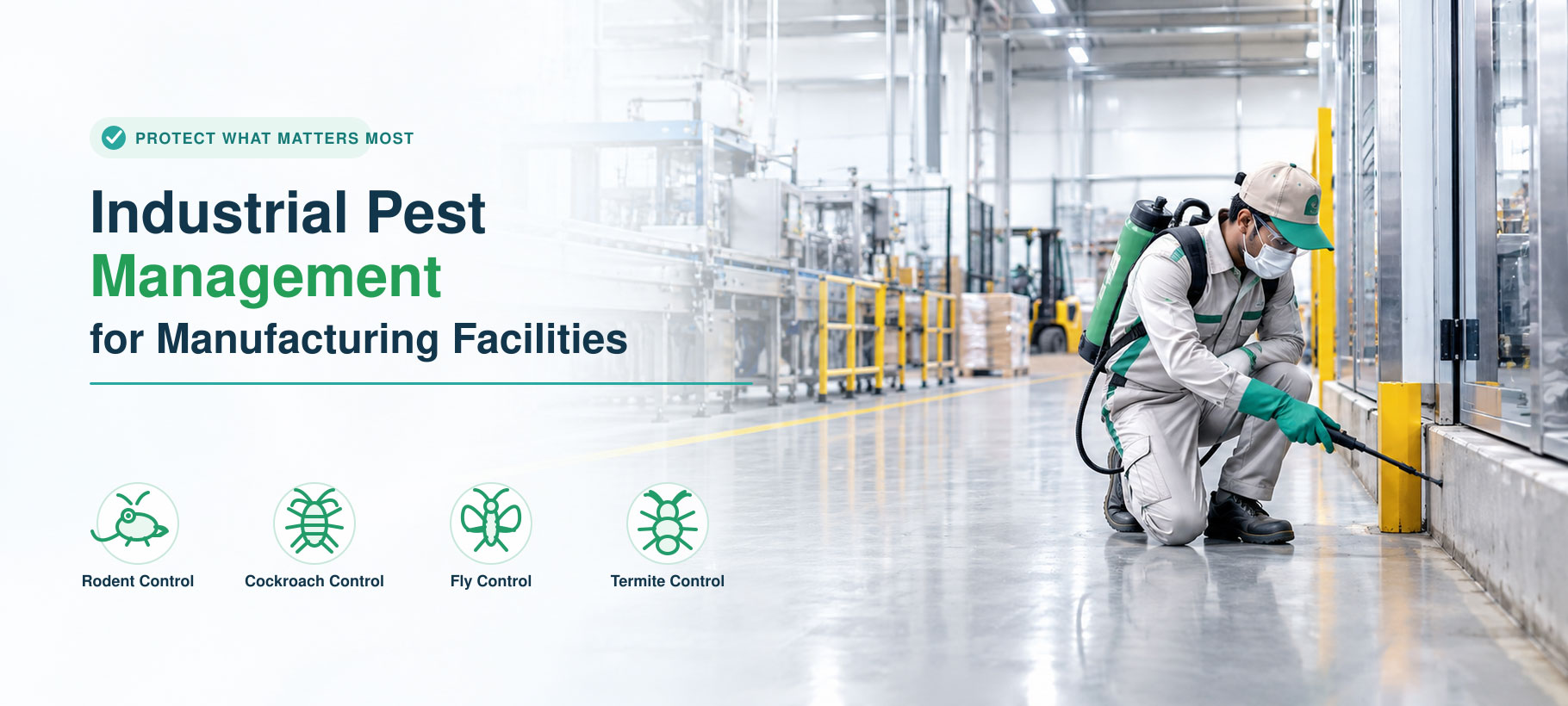
Manufacturing facilities play a vital role in producing, processing, packaging, and distributing products across different industries. From food processing units and warehouses to pharmaceutical plants and engineering factories, every facility must maintain a clean, safe, and well-managed working environment. However, industrial premises can attract pests because of raw materials, stored goods, waste accumulation, moisture, drainage systems, and multiple entry points.
Pests such as rodents, cockroaches, flies, ants, and stored-product insects can damage materials, contaminate products, disrupt operations, and create hygiene concerns. This is why industrial pest management should be an essential part of every manufacturing facility's maintenance and safety programme.
Partnering with a professional pest control company helps businesses identify pest risks, implement preventive measures, and maintain a more hygienic production environment.
Why Manufacturing Facilities Need Regular Pest Management
Industrial buildings often have large storage areas, loading docks, production lines, utility rooms, canteens, drainage networks, and spaces that are difficult to inspect during routine cleaning. These conditions can provide pests with food, water, shelter, and access to the building.
A small pest problem can gradually spread if the source is not identified and addressed. Rodents may enter through gaps around doors or utility pipes, while insects can arrive with incoming packaging, raw materials, or deliveries.
Regular pest control services help manufacturing businesses detect early signs of pest activity, identify vulnerable areas, and implement appropriate control measures before the situation affects daily operations.
Protect Raw Materials and Finished Products
Contamination is a major concern in manufacturing, particularly in food processing, packaging, pharmaceutical, and other sensitive production environments.
Rodents and insects may contaminate stored materials, damage packaging, and compromise the cleanliness of storage areas. In facilities that handle food ingredients, even a minor infestation can lead to product wastage and costly cleaning requirements.
Professional pest management includes inspections of storage rooms, material handling zones, loading bays, and other high-risk areas. Correct storage practices, sealed containers, routine monitoring, and prompt removal of affected materials help reduce these risks.
A planned pest prevention programme supports product protection while complementing the facility's existing quality control procedures.
Prevent Rodent Damage to Machinery and Electrical Systems
Rodents are particularly challenging in industrial environments because they can move through service ducts, ceiling voids, storage racks, and concealed spaces. Their gnawing behaviour may damage packaging, insulation, cables, and other materials.
In certain situations, rodent activity around electrical installations can contribute to equipment faults and operational interruptions. Droppings and nesting materials can also create sanitation concerns.
Effective rodent management involves identifying entry points, inspecting areas showing signs of activity, using suitable monitoring and control methods, and improving building exclusion measures.
A professional pest control company can recommend a site-specific rodent management plan that considers the facility layout, operational requirements, and applicable safety procedures.
Maintain Workplace Hygiene and Employee Safety
Employees deserve a clean and hygienic working environment. Pest activity in production areas, staff canteens, changing rooms, washrooms, and storage spaces can create discomfort and raise concerns about workplace cleanliness.
Flies may gather near waste disposal areas, cockroaches may hide around drains and equipment, and rodents may enter areas where food is stored or consumed.
Regular pest inspections, proper sanitation, waste management, and appropriate treatments help businesses maintain better housekeeping standards. Treatment activities must be coordinated with facility management so that employees, equipment, raw materials, and production processes are adequately protected.
Support Industrial Hygiene and Audit Readiness
Many manufacturing facilities operate under internal quality systems, customer requirements, and industry-specific hygiene standards. Pest activity can lead to audit findings, customer complaints, and additional corrective work.
A documented pest management programme can support inspection readiness by maintaining service records, monitoring reports, pest sighting logs, treatment details, and corrective action recommendations.
The exact documentation and procedures required will depend on the industry and applicable regulations. Facilities handling food, medicines, or other sensitive products should ensure that pest management is integrated with their relevant hygiene and quality assurance systems.
Professional pest control services can help businesses establish consistent inspection and monitoring routines appropriate to their operations.
Common Pests Found in Manufacturing Facilities
Different industrial environments face different pest challenges. Some of the most common include:
Rodents: Rats and mice may damage packaging, contaminate materials, and gnaw on cables or insulation.
Cockroaches: These pests can hide in damp corners, drains, canteens, and equipment spaces where food residue and moisture are present.
Flies: Waste storage areas, drains, and exposed organic material may attract flies and create hygiene concerns.
Ants: Small openings, food residues, and moisture can attract ants into offices, canteens, and storage rooms.
Stored-product Insects: Certain beetles and moths can infest susceptible raw materials and stored products, especially in food-related industries.
Identifying the pest correctly is important because treatment methods vary according to the species, infestation level, location, and operational risks.
Benefits of Hiring Professional Pest Control Services
DIY methods and occasional spraying may not address the underlying causes of industrial pest activity. Manufacturing facilities need a planned approach that combines inspection, monitoring, prevention, and targeted treatment.
Professional pest control services may include:
- Detailed inspection of production areas, warehouses, loading bays, and utility spaces.
- Identification of pest activity, entry points, and conditions encouraging infestation.
- Site-specific rodent and insect monitoring.
- Appropriate treatment recommendations based on the type of facility.
- Advice on sanitation, waste handling, moisture control, and structural exclusion.
- Service documentation and follow-up inspections according to the agreed plan.
Treatments should be selected and carried out by trained professionals using authorised products and methods suitable for the intended application. Sensitive production areas may require additional precautions, including equipment protection, treatment scheduling, and post-treatment cleaning.
How to Find Industrial Pest Control Near Me
When searching online for “pest control near me”, industrial managers should look for a provider with experience in commercial and industrial environments rather than relying solely on the lowest quotation.
Before choosing a service provider, consider the following:
- Experience with factories, warehouses, and manufacturing premises.
- Ability to inspect the facility and identify specific pest risks.
- Clear treatment procedures and safety precautions.
- Monitoring plans and service documentation.
- Recommendations for preventing future pest entry.
- Transparent pricing, service frequency, and follow-up arrangements.
A reliable pest control provider should understand that manufacturing operations cannot always stop for treatment. Service schedules and methods should therefore be planned around production requirements and site safety protocols.
Preventive Measures Every Factory Should Follow
Professional pest management becomes more effective when supported by everyday preventive practices.
Manufacturing businesses should:
- Keep raw materials and finished products properly stored.
- Remove waste regularly and maintain clean waste collection areas.
- Clean food residues and spills promptly.
- Repair leaking pipes and address standing water.
- Seal gaps around doors, windows, pipes, and cable entries.
- Inspect incoming deliveries and packaging for signs of pests.
- Keep external vegetation and unnecessary clutter away from building entrances.
- Record pest sightings and report unusual activity immediately.
- Maintain a scheduled inspection and monitoring programme.
These practices reduce the conditions that attract pests and help identify potential problems before they become widespread.
Choose Pepcopp Pest Control Services for Industrial Pest Management
Industrial pest management requires a systematic approach, reliable inspections, and preventive measures tailored to each facility. Whether you operate a manufacturing plant, warehouse, food processing unit, commercial kitchen, or other industrial premises, early pest detection can help protect materials, maintain hygiene, and reduce avoidable operational disruptions.
PEPCOPP PEST CONTROL SERVICES PVT LTD provides pest management solutions for residential and commercial premises. Our team can help businesses assess pest concerns and identify suitable control measures based on their site requirements.
If you are looking for professional pest control services for your factory or manufacturing facility, contact Pepcopp to discuss your requirements and arrange a site inspection.
Book Your Free Site Inspection
Toll-Free Number: 1800 1212 633
Website: https://pepcopp.co.in
Email: sales@pepcopp.co.in
Choose a proactive approach to industrial hygiene with Pepcopp Pest Control Services.